Construction debris removal is one of the most common questions homeowners and contractors face during a renovation or building project in Vancouver, WA. The short answer is yes, wood, lumber, and framing materials can typically be included, but there are conditions worth knowing. If you have ever stared at growing piles of broken studs, 2×4 scraps, and demolished wall sections on your property, you already understand the frustration. Cluttered job sites in neighborhoods like Hazel Dell and Battle Ground slow down work, create tripping hazards, and can lead to fines when debris is mismanaged. The good news is that professional removal services can haul most common wood and framing waste when it is prepared correctly and complies with Clark County rules. This article walks through what types of wood are accepted, how to get them ready, local considerations, and when to call a specialist.
Key Takeaways
- Most construction debris removal in Vancouver, WA can include clean wood, dimensional lumber, and framing scraps when they are separated from trash and hazardous materials.
- Treated, painted, or engineered wood (like plywood and OSB) is usually accepted, but it may follow different disposal or recycling streams than clean, untreated lumber.
- Contractors and homeowners in Vancouver, Hazel Dell, and Battle Ground must follow Clark County guidelines for safe handling, load securement, and weight limits when hauling debris.
- Proper sorting and cutting of wood debris lowers project costs, improves job-site safety, and increases the chance materials can be reused or recycled.
- Hiring a local junk removal service helps keep construction projects on schedule by handling heavy loading, transportation, and legal disposal of construction materials.
What Wood, Lumber, and Framing Materials Are Usually Accepted?
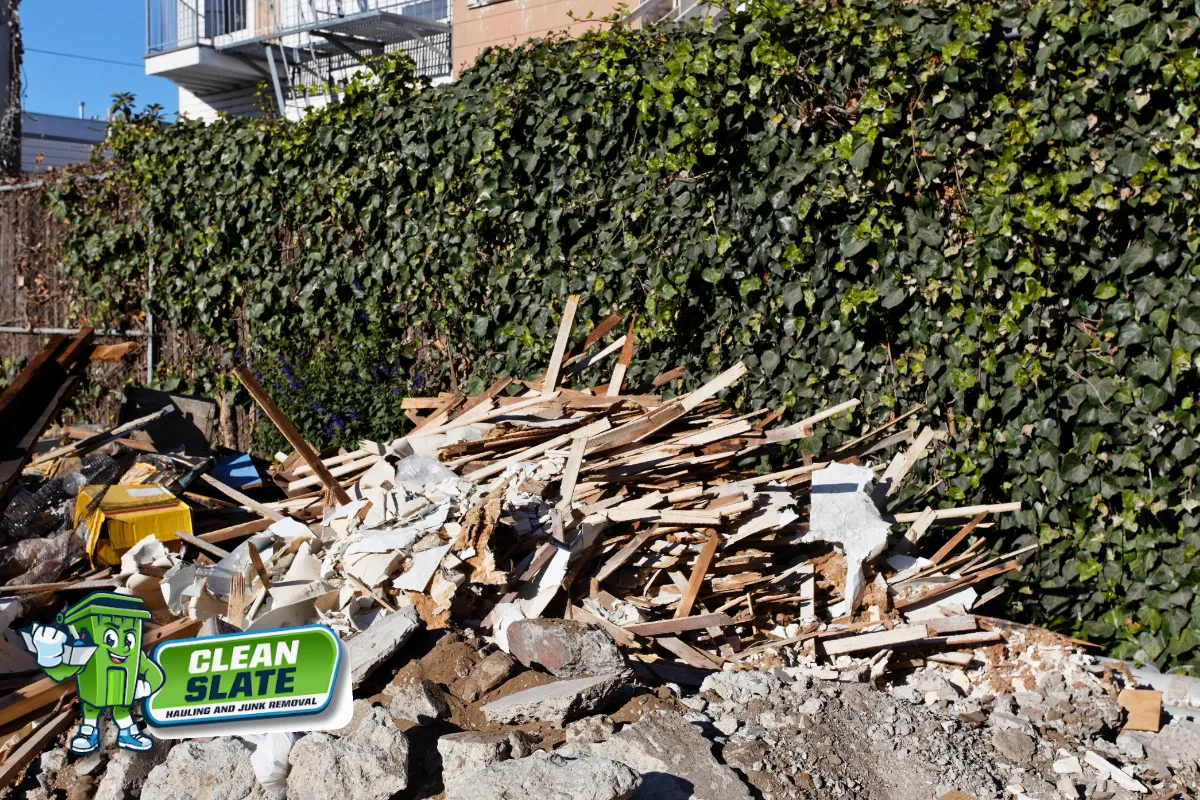
Most common construction wood waste from framing, remodeling, and small demolition jobs can be taken by debris removal services if it is safe and manageable. Clean dimensional lumber and framing scraps are widely accepted for removal across the Vancouver area. Construction projects generate significant debris like concrete and lumber, and wood is consistently among the largest categories by volume.
Here is a list of specific items that are typically accepted:
- Dimensional lumber offcuts (2x4s, 2x6s, 2x10s, and similar)
- Broken studs, joists, rafters, and sill plates
- Floor and roof sheathing panels
- Subfloor panels and truss components
- Headers, blocking, bracing pieces, and stair stringers
- Short cutoffs from door and window openings
Both new construction scraps and demolished framing from older homes in Vancouver, WA are usually acceptable. Wood with nails or screws still embedded is accepted at most facilities because recycling equipment is designed to handle small metal fasteners. In most cases, small amounts of attached hardware such as joist hangers, brackets, and metal plates are fine to leave in place. Loose metal, drywall, and insulation should be separated when possible to reduce disposal cost.
Construction debris includes drywall, wood framing, and roofing materials, so keeping wood distinct from other waste streams makes the process smoother. Commonly accepted wood also includes plywood and engineered wood products when they are clean and separated. Bagged sawdust or small wood chips from cutting and planing can often be included if they are contained and not mixed with hazardous materials.
Wood scraps and cutoffs are common from framing activities during construction projects, and debris removal services can handle both residential and commercial loads. Demolished structural wood is accepted if it is free from hazardous contamination, so clean framing from a wall teardown or a garage conversion is straightforward to haul away.
Wood Types That May Face Restrictions or Extra Handling
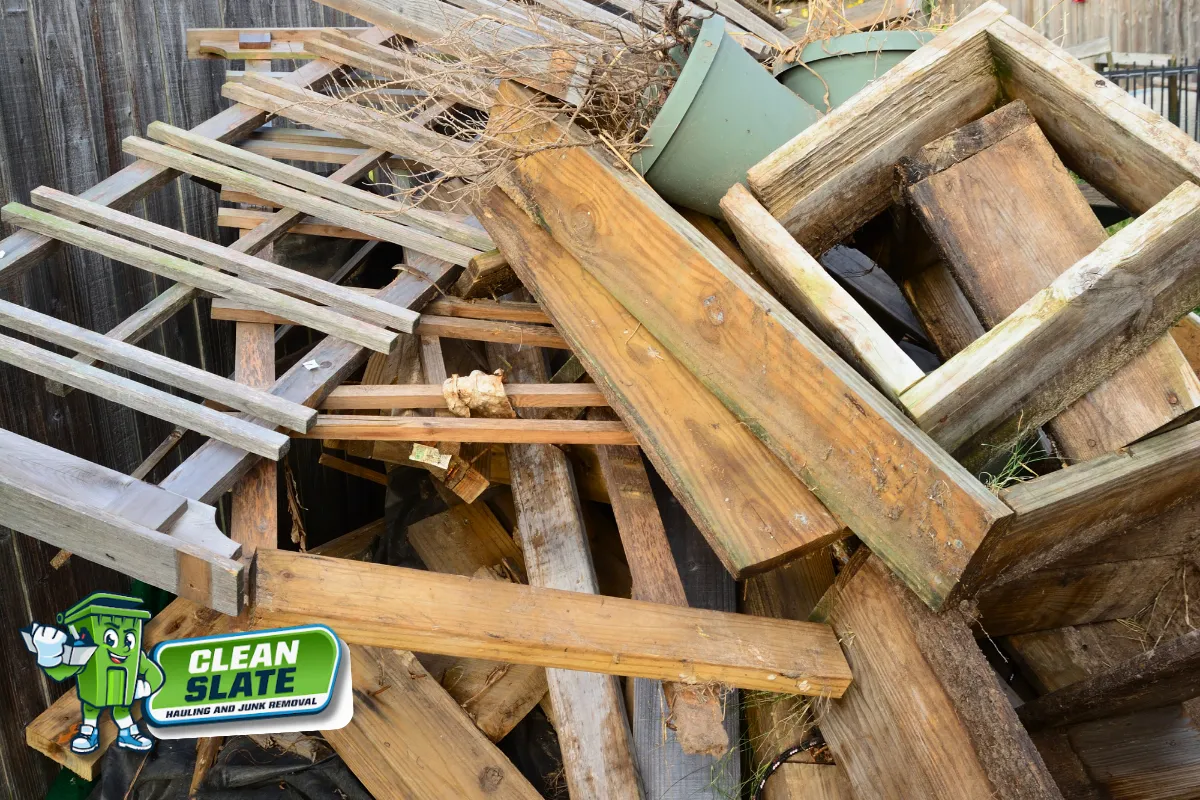
Not all wood is treated the same when it comes to disposal. Some categories need special handling because of coatings, glues, or preservatives that change how the material must be managed.
Treated and Pressure-Treated Lumber
Pressure-treated wood is classified as special waste and has disposal restrictions under state regulations. This includes deck posts, ground-contact boards, and landscaping timbers treated with chemicals like CCA, creosote, or pentachlorophenol. These materials are usually accepted for debris removal but cannot be burned, composted, or processed into mulch. They must go to a permitted landfill that handles this category, and surcharges sometimes apply.
Painted, Stained, and Coated Wood
Treated, painted, or stained wood often requires specialized handling or separate disposal. Interior trim, siding, and older framing that was previously coated can still be hauled, but heavily flaking paint from pre-1978 structures may require extra caution. Testing for lead-based coatings is advisable before demolition on older buildings. Heavy contamination such as paint or chemicals can disqualify wood from recycling streams.
Engineered Wood Products
Engineered materials commonly found in Clark County construction, including plywood, OSB, laminated veneer lumber, and glulam beams, are typically accepted when separated from drywall and flooring remnants. Composite subfloor panels fall into this category as well. Adhesives and resins in these products may route them into different disposal streams than clean, untreated lumber.
What Is Typically Declined or Limited
- Pressure-treated railroad ties and utility poles
- Oil-soaked, heavily contaminated, or charred wood from fire damage
- Wood containing asbestos-backed sheathing or siding
- Materials soaked in solvents or industrial chemicals
Recycling facilities may not accept wood that is wet, moldy, or heavily contaminated with substances that make safe processing impossible. Hazardous waste and asbestos-containing materials are regulated in Vancouver, Washington and must never be mixed into general construction debris loads. Common debris types like roofing materials, insulation, and packaging each follow their own disposal channels as well.
Demolition rubble from a renovation can include torn-out cabinets and broken tiles alongside wood, but those items should be sorted separately for efficient disposal.
Preparing Wood and Framing Debris for Safe Pickup
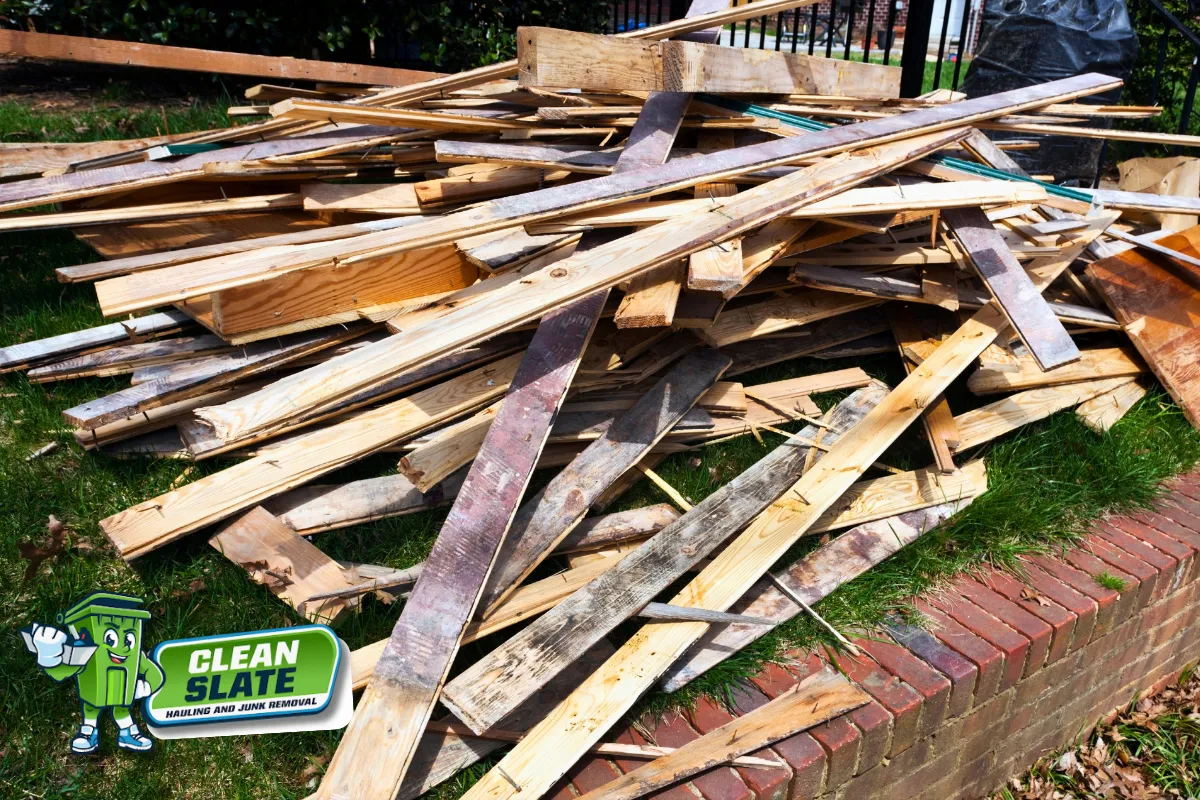
Proper preparation makes debris removal safer, faster, and more affordable for both homeowners and contractors. Construction sites generate waste daily from various materials, so staying ahead of the buildup is a practical way to keep a project running smoothly.
Here are the key steps for preparing wood and framing debris:
- Keep wood and framing debris together in a dedicated pile, separate from general garbage, roofing materials, and yard debris. This streamlines loading and potential recycling.
- Cut excessively long boards, studs, and joists down to manageable lengths, generally four to six feet, so they fit safely in trucks or trailers without overhanging.
- Stack lumber neatly with ends aligned rather than scattering pieces across the site. This speeds up hauling and reduces the risk of splinters or twisted ankles.
- Remove large loose metal hardware when feasible, such as brackets or long bolts, while leaving normal nails and screws embedded for efficiency.
- Stage heavy debris where trucks can access it easily, such as near the driveway or curb, while following Clark County rules about keeping sidewalks and roadways clear.
- Bag or contain sawdust and small scraps so they do not blow across the property or into storm drains.
Separating wood from other debris like soil, brush, and branches allows hauling crews to collect and dispose of each category through the correct channel. When loads are mixed, tipping fees at local facilities tend to increase, and recyclable material may end up in the landfill unnecessarily.
Local Considerations in Vancouver, WA and Clark County
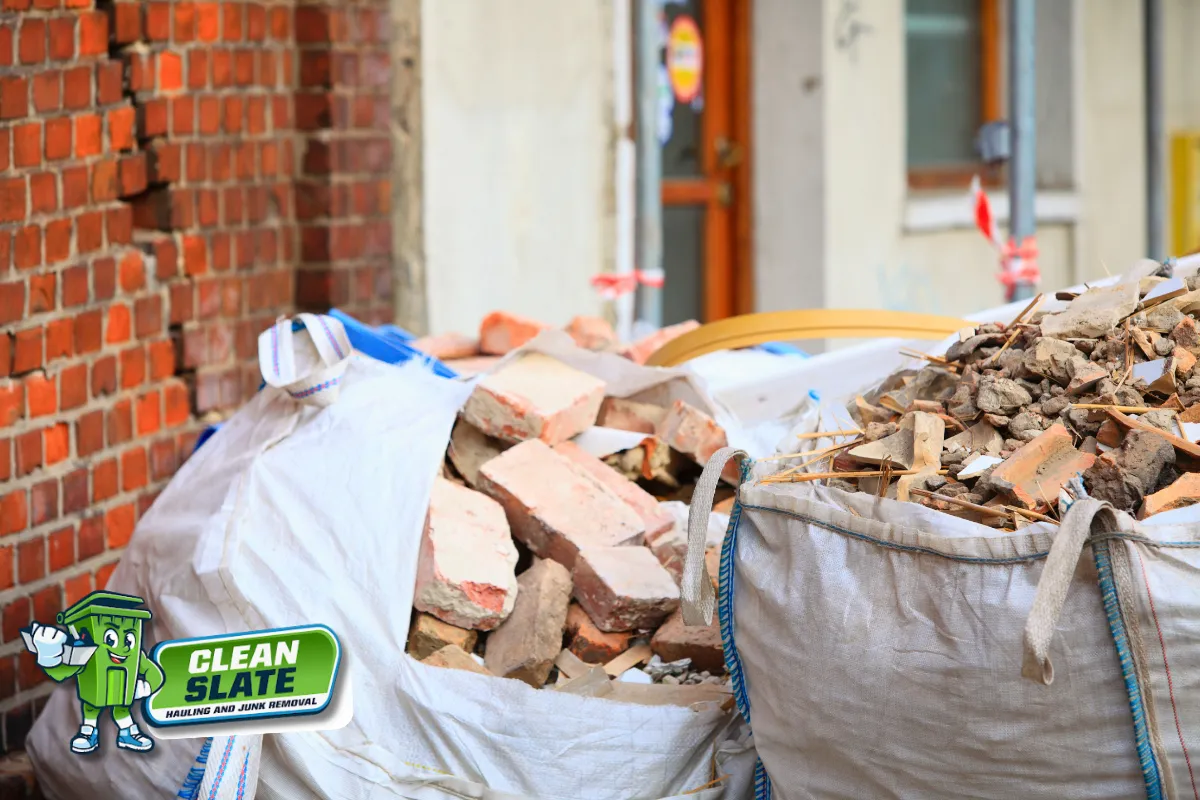
Clark County, including the city of Vancouver, Hazel Dell, and Battle Ground, follows regional standards for safe hauling, load securement, and responsible disposal. Clark County regulates construction and demolition waste, requiring secure loads on all public roads. Every load of construction debris transported through the area must be properly covered and secured to prevent boards, nails, and other materials from falling or creating road hazards.
Weight Limits and Wet Weather
Weight limits apply to both individual containers and vehicles. Dense, wet lumber or stacked framing debris can reach those limits quickly in rainy Vancouver weather. A pile of soaked plywood sheets, for example, weighs substantially more than the same stack in dry conditions. Planning for weight helps avoid overloaded trucks and extra trips.
Source Separation Matters
Local facilities and transfer stations encourage separation of clean wood from mixed construction debris because it can sometimes be diverted for reuse or recycling. Local facilities accept clean wood primarily for recycling into biomass fuel or mulch. As of recent reporting, there were no recyclers in Clark County accepting mixed C&D loads, which makes source separation critical.
Concrete, metal, and wood can each be recycled during debris cleanup, but only when they arrive at the correct facility sorted and free from contaminants. Recyclable materials mixed with garbage lose their diversion value.
Homeowners vs. Contractors
Homeowners doing a small renovation project may have different disposal options than commercial contractors, but both are responsible for keeping materials out of storm drains and public rights-of-way. Some neighborhood associations and city areas may have additional rules about where debris can be stored before removal. Checking any applicable property guidelines before starting a landscaping project or building addition prevents surprises.
Vancouver requires businesses to use licensed haulers, and Waste Connections serves as a contracted provider in the area. However, specialized junk removal and hauling companies offer convenient alternatives for construction-specific debris that does not fit into standard curbside service.
Why Including Wood and Framing Waste in Debris Removal Makes a Difference
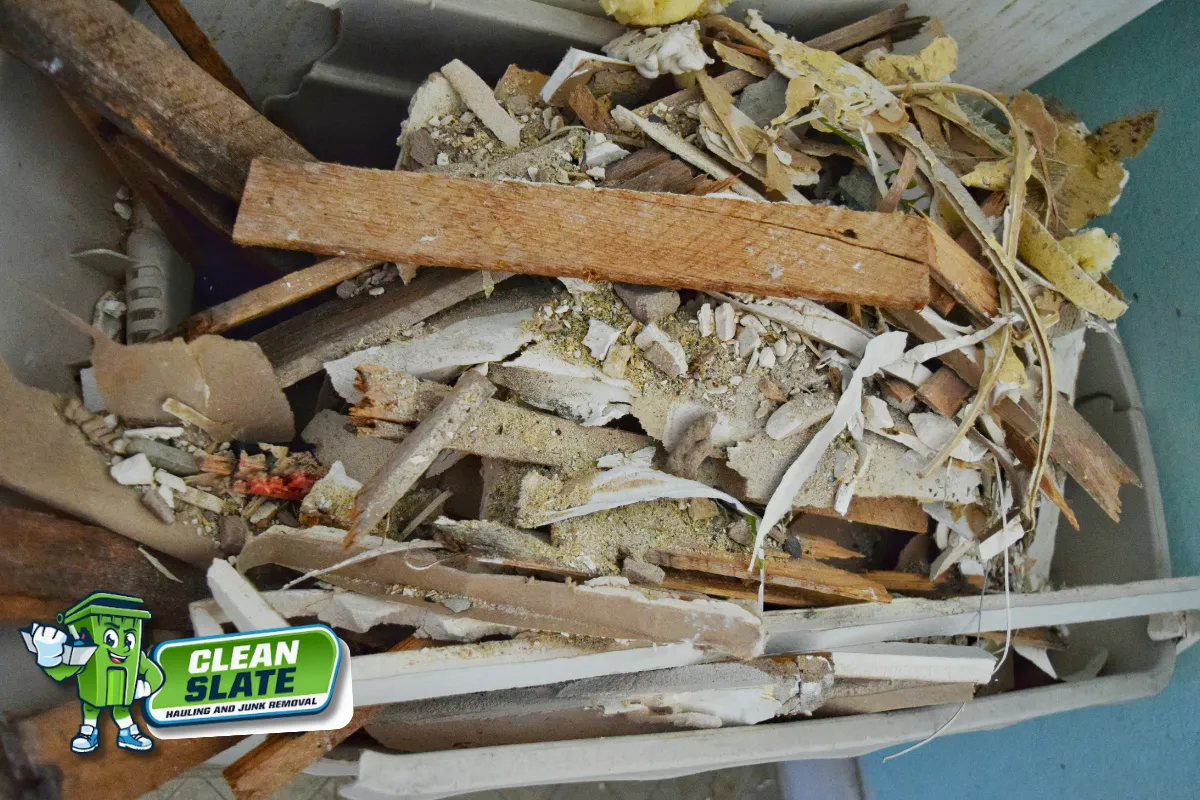
Bundling wood, lumber, and framing materials into one coordinated debris removal plan helps projects stay on schedule and within budget. Here is why it matters.
Safety on the Job Site
Accumulated debris creates tripping hazards on construction sites. Clearing sharp offcuts, broken studs, and nail-filled boards reduces the likelihood of injuries and helps keep walkways open for crews and residents. Scheduled hauling maintains safe access for contractors moving between work areas, and it removes waste before it becomes a safety concern.
Efficiency and Scheduling
Instead of multiple small dump runs, a single professional pickup can remove wood, selected construction debris, and related bulky items. Professional debris removal prevents project delays and maintains safety, freeing contractors to focus on installations and inspections. Regular debris removal prevents the kind of backup that forces trades to work around piles of scrap. Efficient removal of framing waste means the next phase of work can begin on time.
Cost Advantages
Sorted and consolidated wood debris is typically faster to load and may qualify for lower disposal rates than unsorted mixed waste piles. Clean wood that is separated on site often costs less to dispose of because it avoids the higher tipping fees associated with mixed loads. For homeowners managing a tight budget, this is a practical way to keep overall project cost down.
Environmental Benefits
Diverting clean wood from the landfill reduces methane emissions and supports the local recycling market. Separated lumber can sometimes go to compost facilities, biomass energy operations, or be ground into mulch for use in the community. The environment benefits when materials stay out of the waste stream and find a second life. Professional hauling ensures legal and efficient waste disposal, which protects both the property owner and surrounding natural areas.
Neighborhood Relations
In established Vancouver neighborhoods, limiting visible piles of studs and sheathing helps maintain curb appeal during remodeling. Neighbors appreciate a clean, organized site, and it reflects well on the contractor or homeowner managing the project. Trees, yard space, and shared fences stay protected when debris is removed promptly rather than left to shift in wind or rain.
Construction Debris Removal in Vancouver, WA – Clean Slate Hauling And Junk Removal
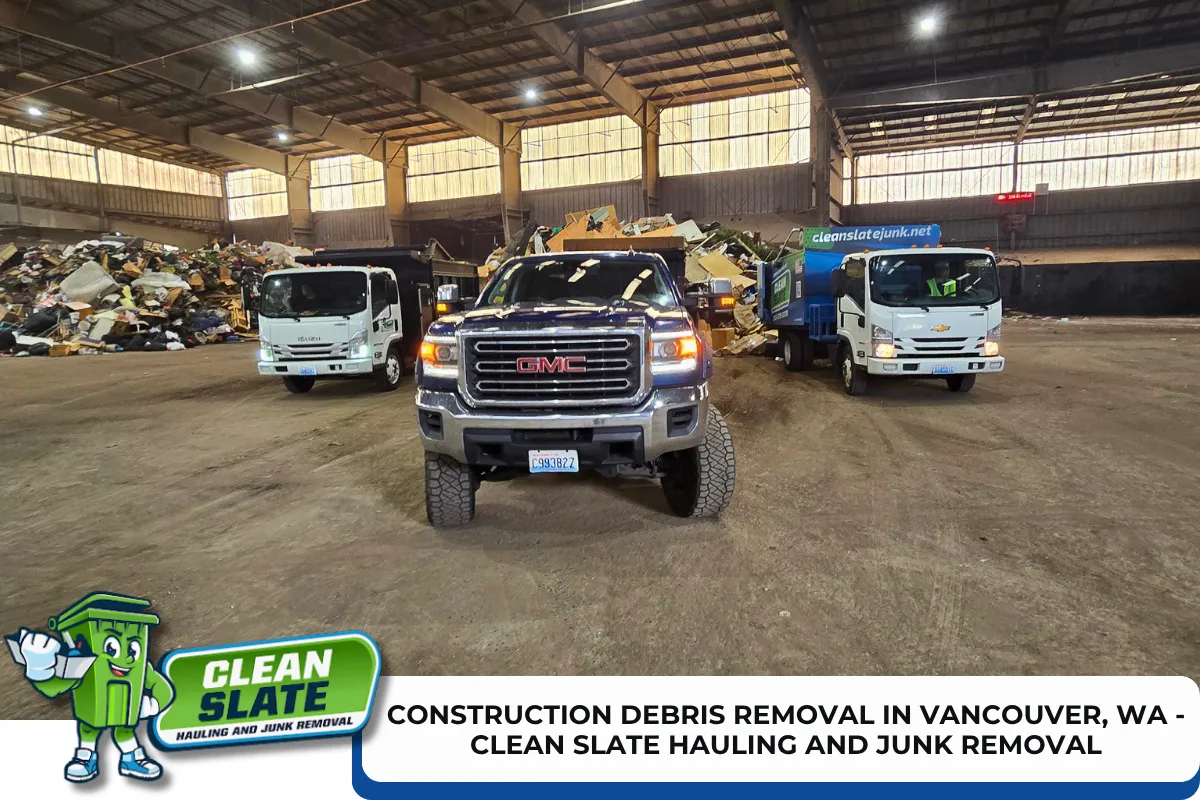
At Clean Slate Hauling And Junk Removal, we specialize in construction debris removal for homeowners and contractors throughout Vancouver, Washington. Our team handles wood, lumber, and framing materials from remodels, additions, garage conversions, deck teardowns, and small demolition projects. We load everything for you and haul it away, and we offer same day or next day services whenever our schedule allows.
We understand the specific needs of job sites in Vancouver, Hazel Dell, and Battle Ground. Tight driveways, rainy seasons, and the pressure to keep work areas clear for inspections and trade scheduling are challenges we deal with every day. Our focus is on providing affordable, convenient, and professional hauling so our clients can stay on task instead of worrying about where their debris ends up.
Call us at (360) 469-5802 to discuss your project, request a free no-obligation estimate, or fill out our contact form to schedule a visit that fits around your timeline. We are not a cleaning company. We are a dedicated junk removal and hauling service built to load heavy framing debris, separate materials when practical, and deliver them to appropriate facilities in compliance with local regulations. Partner with Clean Slate Hauling And Junk Removal to keep your construction site safe, organized, and ready for the next phase of work.
Frequently Asked Questions
Can I mix yard debris with my wood and framing waste in one pickup?
Many debris removal services can haul both yard debris and construction wood on the same visit, but the materials typically need to be separated into distinct piles for correct loading and disposal. Branches, leaves, grass clippings, and brush are managed through composting or green waste streams, while lumber, studs, and sheathing follow construction or demolition waste channels. Mixing soil, rocks, and stumps into piles of cut lumber can significantly increase weight and cost, so it is better to keep landscaping waste distinct from framing scraps. In some parts of Clark County, clean yard material may go to different facility options than construction debris, and separation helps avoid complications when loads arrive at drop-off sites. Keeping trees and brush away from your wood pile is a simple step that saves time and money.
Do I need a permit to pile construction wood debris in front of my house?
Permit requirements depend on whether debris occupies private property, sidewalks, or public streets within Vancouver, Washington. Keeping wood piles within the boundaries of a driveway or yard is generally different from blocking a sidewalk, parking lane, or travel lane, which can trigger enforcement action or safety concerns from the city. Avoid placing studs, plywood, and other demolition materials where they obstruct pedestrians, mail delivery, or emergency access. If you are planning to use a dumpster, pod, or extended curbside storage for a large construction project, check with the appropriate city department to confirm whether a permit is needed and what placement rules apply to your specific property.
How much construction wood can typically be removed in one junk hauling visit?
Capacity varies by provider and vehicle size, but many junk removal trucks are designed to handle substantial volumes of framing, sheathing, and trim from typical residential remodels. Heavy items such as wet lumber, beams, or stacked decking can bring a load to its weight limit before the truck bed is physically full, which happens more often during rainy months. To plan efficiently, estimate the number of rooms or square footage being remodeled and discuss it with the hauling service in advance so they can send the right truck size or schedule multiple trips if needed. Sending clear photos of your lumber piles or framing debris ahead of time helps the company provide a more accurate and affordable estimate before arriving on site.
What should I do with small amounts of leftover new lumber from a project?
Many homeowners finish construction projects with a few uncut boards, short studs, or unused sheathing panels still in good condition. Practical options include saving straight boards for future repairs, offering surplus lumber to neighbors, or repurposing it for shelving, workbenches, or small yard projects. If reuse is not realistic, these materials can be included in a scheduled debris pickup, especially when combined with other job-site waste to make the trip worthwhile. Keep new wood dry and off the ground until removal day so it remains safe to handle and does not become moldy or attract insects. Even a small stack of clean lumber has value when it stays in usable condition.
Can construction debris removal help with partial demolitions inside an occupied home?
Many debris removal services routinely assist with interior projects such as kitchen remodels, bathroom updates, wall removals, and basement framing changes where the family is still living in the home. Crews can remove demolished studs, cut-back plates, subfloor sections, and trim while working carefully around remaining finishes and household belongings. Coordinating pickups at key milestones, such as after demolition day and again after rough framing, keeps the home more livable and reduces dust and clutter between phases. Communicate clearly about access routes, parking availability, and any time-of-day restrictions so the hauling team can move materials out quickly and respectfully without disrupting your household routine.
Disclaimer
Disclaimer: This article provides general information about construction debris handling in Vancouver, Washington and is not legal advice. Always verify current local regulations and facility requirements before disposal, as rules and accepted materials may change.
Read How Garage Cleanouts Help Make Room for Parking a Car in Vancouver, WA