Why Pre-Sorting Matters Before Hoarder Cleanouts in Tacoma
Hoarder cleanouts rarely go smoothly when families skip the sorting step and jump straight into hauling. Picture a Tacoma home where clutter fills every room from floor to ceiling, strong odors hit you at the door, and animal waste has gone unnoticed for months. The mess creates immediate safety risks: fire hazards from stacks of newspapers near a furnace, blocked exits that violate fire code, and hidden mold spreading behind damp cardboard in a climate as wet as western Washington. Emotional distress between a family member who wants to save everything and another who wants it all gone only makes the job harder. The solution is a step-by-step pre-sorting plan built for hoarding situations in Tacoma, WA, one that covers safety hazards, essential paperwork, valuables, everyday belongings, and problem materials before any hauling crew arrives.
Key Takeaways
- A safety assessment should occur before any cleanup begins, covering blocked exits, electrical hazards, mold, pest activity, and structural damage throughout the entire property.
- Important documents, active medications, IDs, and sentimental items need to be identified and separated early so they are not accidentally lost once the removal process starts.
- Every item in the home should fall into a clear category: keep, donate, recycle, or trash. Hazardous materials like paints, sharps, and animal waste require their own handling under Tacoma and Washington disposal rules.
- Preparing for a hoarder cleanout requires careful planning to ensure safety, including booking hoarder cleanout services and confirming Tacoma waste guidelines well before junk removal day.
- Systematic sorting reduces cleanup time by roughly 40 percent compared to random methods, saving families both money and emotional energy.
Safety First: What Must Be Checked Before Any Sorting Begins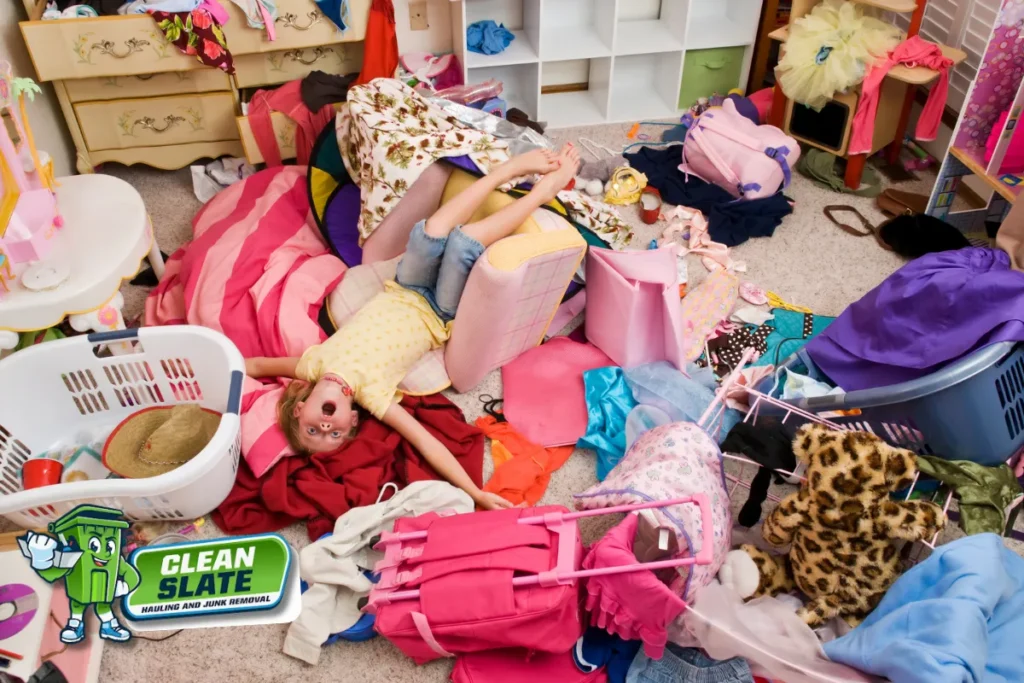
Safety concerns come before every keep-or-toss decision. Tacoma Municipal Code Chapter 8.30 treats large amounts of accumulated trash, scrap, batteries, and hazardous materials on a property as a potential public nuisance, and local fire codes require unobstructed egress from every room. Before you touch a single box, walk the home and document the property condition with photos and videos so you can track progress later.
Here is what to check during that initial walkthrough:
- Blocked exits and pathways. Every exterior door and window used for escape must be reachable. Sorting should begin by addressing safety hazards and blocked exits so that anyone inside can leave quickly.
- Electrical hazards. Overloaded extension cords, frayed wiring, and debris piled against breaker panels are fire hazards that need immediate clearing. Large amounts of combustible material near heaters, stoves, or outlets dramatically increase the risk.
- Moisture and mold. Tacoma’s damp climate means leaking pipes, roof drips, and condensation behind clutter often lead to serious mold growth. Washington State health guidelines recommend addressing moisture and removing moldy materials within 24 to 48 hours of discovery. If you find heavy mold, professional help may be needed for severe mold or structural damage.
- Animal waste and pest activity. Rodent droppings, insect remains, or pet waste left for extended periods create biohazard conditions. Flag these zones but do not handle them without proper equipment.
- Unstable stacks and structural damage. Severe accumulation may conceal unstable stacks and structural damage, including sagging floors beneath heavy furniture or appliances. Do not enter rooms where the floor feels soft or where piles lean dangerously.
Gather essential protective equipment like gloves and masks before starting any walkthrough. At minimum, wear nitrile or heavy rubber gloves, an N95 respirator where strong odors or mold are present, closed-toe shoes, and eye protection. Safety gear includes protective clothing, gloves, and masks suitable for the conditions you encounter. Proper ventilation is necessary during a hoarder cleanout, so open windows and use fans when possible.
Establish cleanup priorities by addressing high-risk areas first. Create a safe access point before beginning the cleanup process so that helpers, haulers, and emergency responders can move through the home. Safety assessments identify hazards like mold and pests that may require professional expertise before the rest of the sorting can proceed safely. Documenting hazards with photos aids in tracking progress and communicating with any professional team you bring in later.
Critical Essentials: Documents, Medications, and Daily-Use Items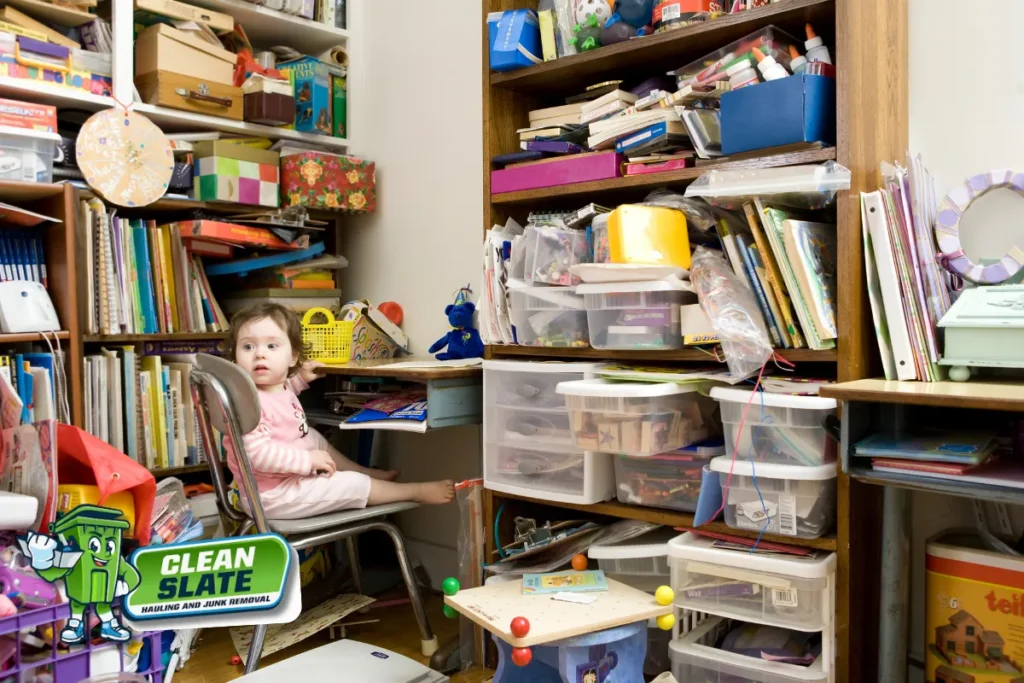
Before large-scale junk removal or hauling begins, pull out every item the person living in the home cannot afford to lose. Identify important belongings like IDs and financial records before sorting anything else. Once trucks start loading, small envelopes and pill bottles disappear fast.
Gather and box these important documents:
- Government-issued IDs, passports, and birth certificates
- Social Security cards
- Insurance policies (health, auto, homeowner or renter)
- Tax returns from the past several years
- Property deeds, mortgage paperwork, or lease agreements
- Tacoma utility bills and account numbers
- Vehicle titles and registration
For health-related items, collect:
- Active prescriptions and check expiration dates on all over-the-counter medications
- Medical devices such as hearing aids, CPAP machines, and blood pressure monitors
- Eyeglasses and contact lens supplies
- Veterinary records and pet medications
Label bins clearly: one for important papers, one for active medications, and one for daily-use belongings like phone chargers, keys, and wallets. Store them in a clean room inside the home or move them off-site with a trusted person. Document the property condition before cleanup with photos and videos, including where essential items were found. Documenting the property condition helps track progress during cleanup and protects against disputes about missing possessions.
Separating these items early reduces the risk of accidental disposal once hoarder house cleanouts and hauling teams begin moving large amounts of clutter out the door.
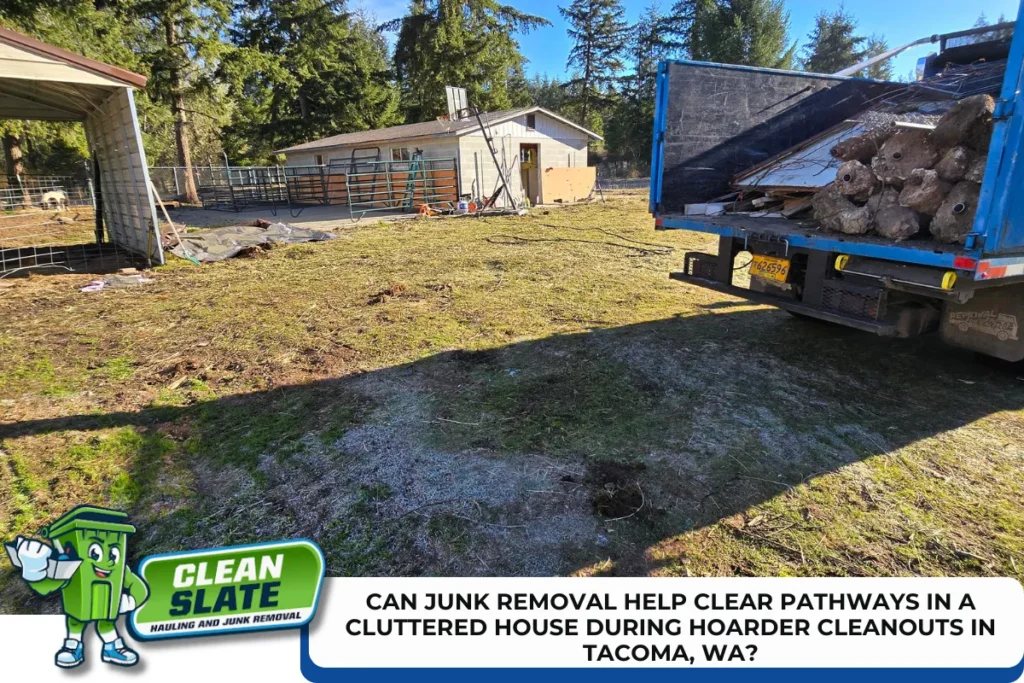
Read Can Junk Removal Help Clear Pathways in a Cluttered House During Hoarder Cleanouts in Tacoma, WA?
Valuables and Sentimental Items: What to Protect From the Pile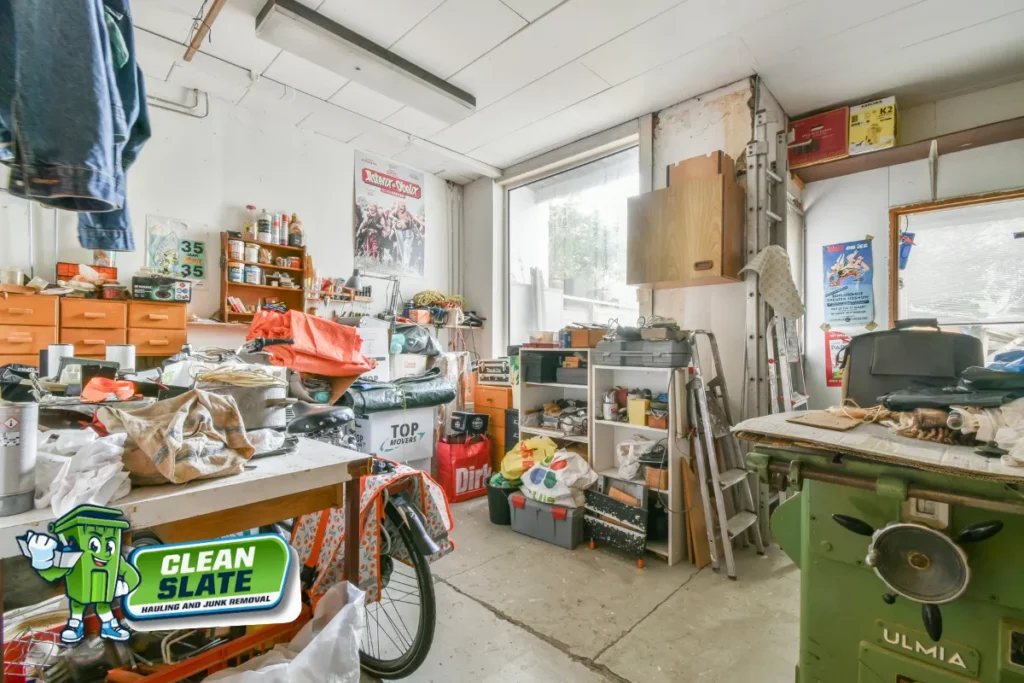
Hoarding cleanup carries an emotional weight that regular decluttering does not. Hoarding affects nearly 2.5 percent of the general population, and the disorder is recognized in the DSM-5, meaning the person attached to these belongings may feel genuine anxiety about letting go. Approach this category with patience.
Pull aside valuables such as:
- Jewelry, loose cash, and coin collections
- Firearms, which must be stored and transported in compliance with Washington state law
- Electronics that still function and hold data
- Antiques, artwork, or collectibles with potential resale value
- Family heirlooms passed down across generations
Sentimental items deserve their own space:
- Photo albums and framed pictures
- Handwritten letters and greeting cards
- Children’s artwork, school projects, or baby items
- Military memorabilia, awards, and certificates
- Religious objects and keepsakes tied to major life events
Sentimental items should be handled carefully and revisited later, not decided on in the heat of a full-scale cleanout. Use a simple system: label cardboard boxes as “Must Keep,” “Review Later,” and “Unsure.” Cardboard boxes are useful for sorting and organizing items and can be written on with large markers. This approach fights decision fatigue and keeps the process moving. Sentimental items should be set aside for later review during sorting rather than forcing the homeowner into snap choices.
You can also document and photograph sentimental items to preserve memories without keeping every physical object. A quick photo of a child’s drawing or a stack of old letters lets the person hold onto the memory while reducing the volume of belongings that need storage.
Store protected items in a separate, clean area away from trash bags and donation piles to prevent mix-ups once junk removal starts.
Dividing Everyday Belongings: Keep, Donate, Recycle, or Discard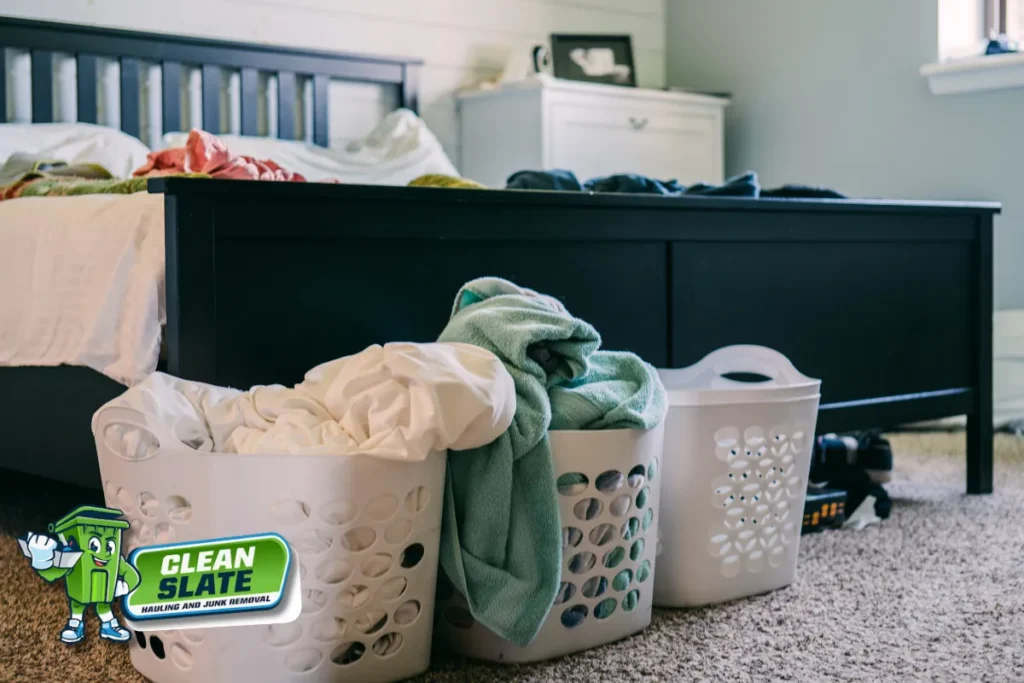
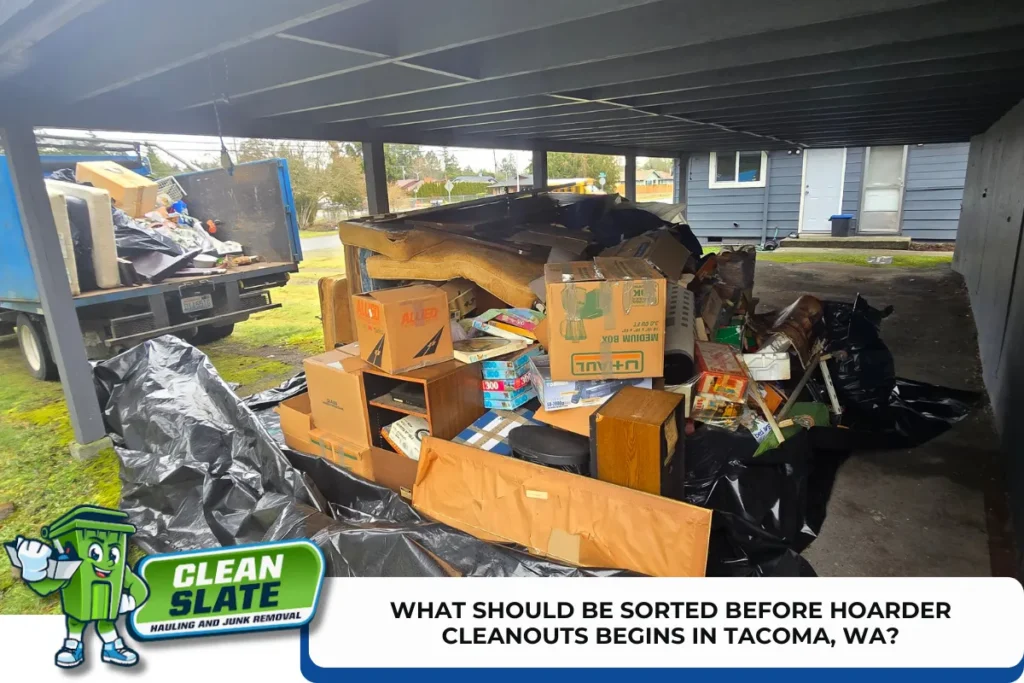
Clear sorting categories make hoarding cleanup more efficient for families and professionals alike. The four-box method categorizes items into Keep, Donate, Recycle, and Trash. Label each pile with large markers or colored tape so everyone on site knows where things go.
Typical items you will encounter include clothing, dishes, cookware, linens, books, small appliances, and furniture. For each, ask:
- Is it in good condition and something the person will actually use? Keep.
- Is it usable but not needed? Donate. Donation centers accept usable clothing and household items, and many Tacoma charities will pick up clean furniture and working appliances.
- Is it recyclable? Recyclable materials include metal, electronics, and cardboard. Tacoma’s recycling guidelines cover these categories, and the city offers resources to help residents figure out what goes where.
- Is it broken, expired, or contaminated? Trash. Immediate discard of expired food and broken items is recommended.
Items contaminated by animal waste, mold, or strong odors should almost always be discarded regardless of their original value. Wet upholstered furniture that has sat in a damp Tacoma garage for months, for example, is a health risk, not a donation candidate. Physical health comes first.
Starting with less emotionally charged areas builds momentum during sorting. Tackle the garage, a storage closet, or a spare room before moving to the homeowner’s bedroom or a space full of possessions with deep personal meaning. Obvious trash should be removed first to create space clean enough to stage other categories. Start cleaning less emotionally charged areas to build momentum before working through tougher rooms.
Systematic sorting reduces cleanup time by 40 percent compared to random methods, meaning families who take even a few hours to pre-sort can cut a full day off the hauling schedule.
Hazardous, Restricted, and Problem Materials in Tacoma, WA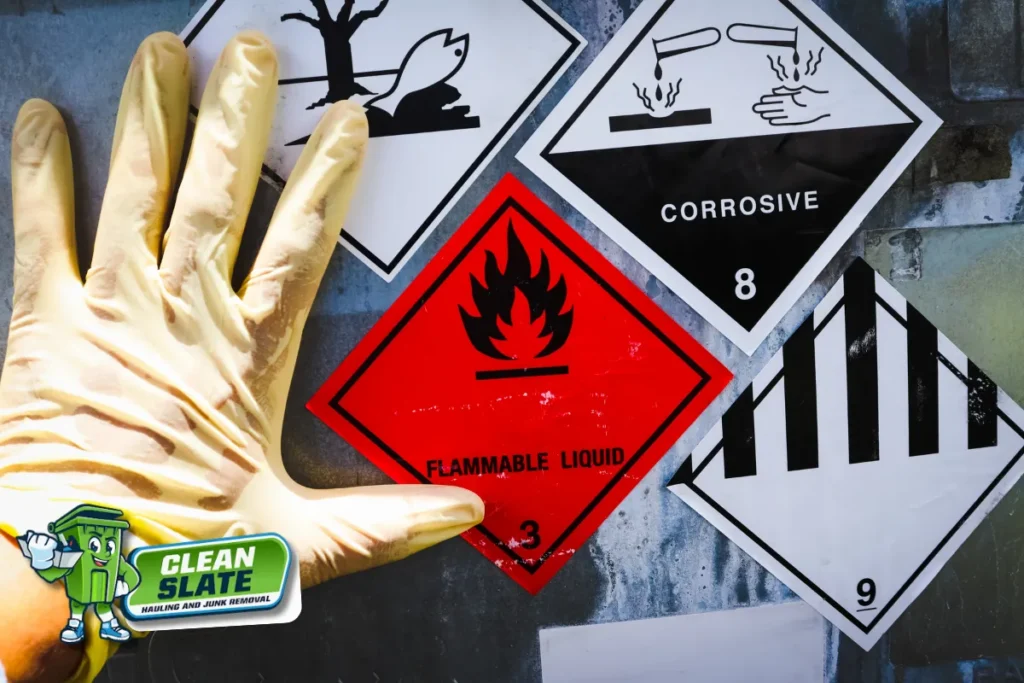
Some items cannot go into standard junk removal loads or regular curbside garbage under Washington and Tacoma regulations. Tacoma’s solid waste code prohibits disposing of toxic, extremely hazardous, or liquid wastes in normal trash. Proper disposal avoids legal issues and environmental damage, so getting this right matters.
Common restricted items found in hoarding situations:
- Paints, stains, and solvents
- Pesticides, herbicides, and insecticides
- Automotive fluids including used motor oil, antifreeze, and brake fluid
- Batteries of all sizes
- Fluorescent bulbs and compact fluorescent lamps
- Propane tanks and pressurized aerosol cans
- Certain cleaning chemicals and acids
Biohazards often found in a hoarder house include:
- Sharps such as needles, syringes, and lancets, which under Washington law (RCW 70A.228) must be placed in rigid, puncture-resistant, labeled containers before disposal
- Rotting food and organic matter
- Animal waste and rodent remains
- Heavy mold growth on walls, carpet, or furnishings
Separate all hazardous materials into clearly marked “Do Not Trash” zones so hoarder cleanout services can plan proper handling. The City of Tacoma offers resources for waste reduction and disposal, including the Household Hazardous Waste facility at the Tacoma Recovery and Transfer Center on South Mullen Street, which accepts acids, solvents, automotive fluids, fluorescent bulbs, used motor oil, and sealed sharps containers.
Professional hoarder cleanout services may handle some of these categories, but others must go through city or county hazardous waste drop-off programs. Hazardous materials require specialized disposal methods, so always confirm current Tacoma guidelines before loading anything questionable into a truck. Keeping these items out of normal trash helps reduce landfill waste and keeps the cleanup compliant with local law.
Getting Ready for Hoarder House Cleanouts and Junk Removal Day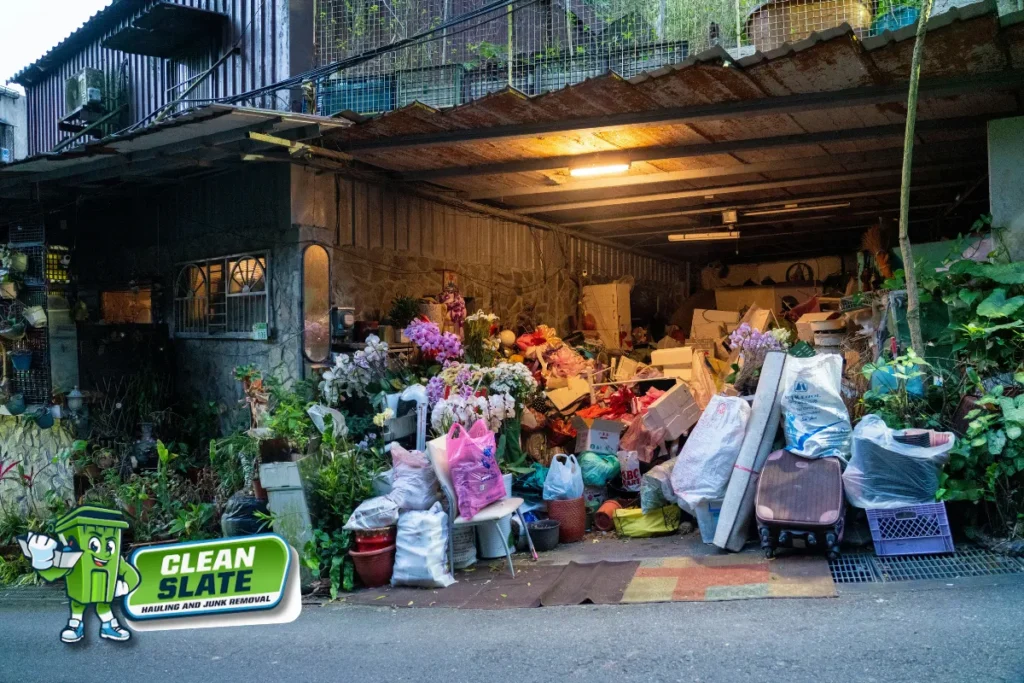
Organized pre-sorting makes hoarder cleanouts smoother, faster, and less stressful for everyone involved. A practical workflow helps make hoarder cleanouts faster and less overwhelming, and by the time the crew shows up, the hardest decisions should already be behind you.
Start by creating a simple written cleanup scope:
- Which rooms to prioritize first (usually one room at a time to avoid overwhelm)
- What has already been sorted and where each category is staged
- What services include junk removal only versus additional tasks you may need to arrange separately, such as deep cleaning by a specialized crew
Designate a decision-maker or small team who can answer questions for the haulers about borderline items and final keep-or-toss calls. This prevents the process from stalling every time someone pulls a box of unknown belongings from a closet.
Practical prep steps for the day itself:
- Clear driveway access and reserve parking for trucks. If space is tight on the north end or in older Tacoma neighborhoods, confirm logistics in advance.
- Notify neighbors if large amounts of clutter, furniture, and appliances will be hauled from the property. A quick heads-up avoids complaints and keeps things civil.
- Arrange same-day donation pickups where possible so usable items leave the property on schedule.
- A dumpster or professional junk removal service may be needed for waste disposal depending on the volume.
- Stock up on heavy-duty trash bags, which are essential for hoarder cleanout work.
- Set up safe staging areas necessary for sorting and cleaning items, ideally in a cleared garage, patio, or driveway.
Setting clear boundaries for sorting sessions can prevent fatigue. Schedule work in blocks of two to four hours, and build in regular breaks, which can prevent decision fatigue during sorting. Rest days between intense sessions also reduce emotional burnout for families dealing with a loved one’s possessions.
Local waste management handles bulky item pickups in Tacoma, but oversized furniture, appliances, and large amounts of debris may require a special appointment or additional fees. Confirm these details before the job starts so there are no hidden fees or surprises.
Pre-sorting sets up the home for whatever comes next, whether that is a full deep cleaning, mold remediation, repairs, or simply moving back in. The work begins long before the truck pulls up, and every hour spent sorting in advance is an hour saved on cleanout day. Professional cleanup can reduce costs by preventing improper handling of valuables and regulated materials alike. Professional hoarding cleanup may involve sorting and disposal, but the more organized you are beforehand, the less time and money the entire process takes. Eco friendly disposal is easier to achieve when recyclables, donations, and hazardous materials have already been separated from ordinary trash.
Hoarder Cleanouts in Tacoma, WA – Clean Slate Hauling and Junk Removal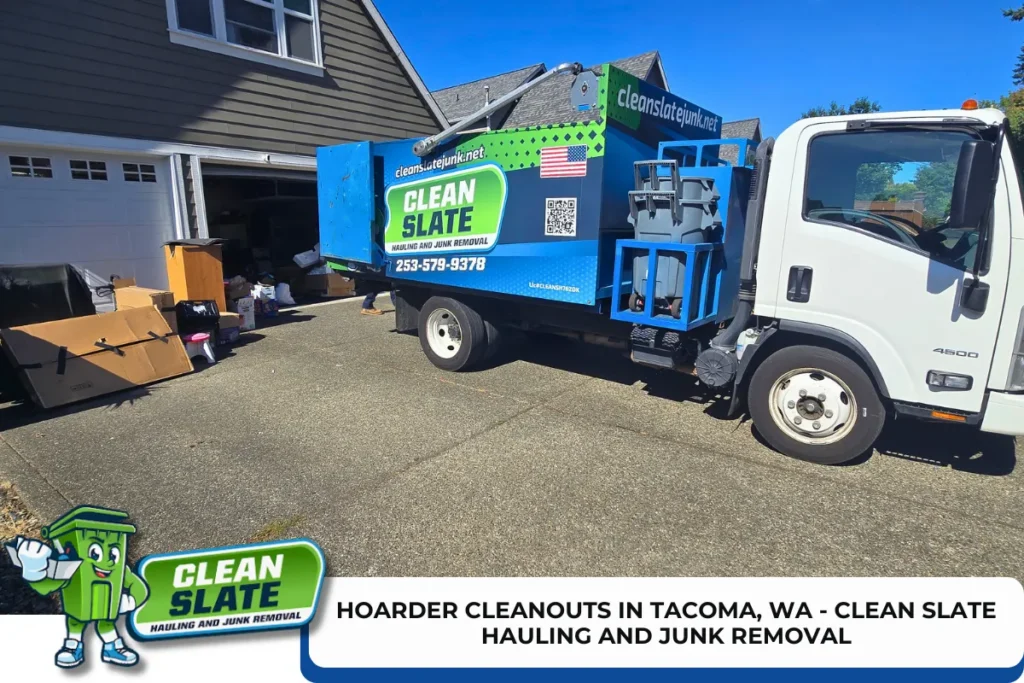
We are Clean Slate Hauling And Junk Removal, a Tacoma-based junk removal and hauling company that handles discreet hoarder cleanouts and hoarder house cleanouts across the area. We are not a cleaning company. We are the crew that shows up with trucks, labor, and the know-how to remove large amounts of unwanted items, furniture, appliances, boxes, trash, and clutter from your property. Our professional team understands the tough conditions that come with hoarding situations, including strong odors, animal waste, and emotionally difficult spaces. We work compassionately, without judgment, and we follow every agreed-upon sorting rule so your sentimental items and belongings stay protected. Whether you need a customized plan for a single room or the entire property cleared, give us a call at (253) 246-1792 to schedule an estimate. You can also visit our website and fill out our contact form for hoarder cleanouts in Tacoma, WA. We are here to help you create a safe, usable space again.
Frequently Asked Questions
What room in a hoarder house should be sorted first in Tacoma, WA?
Most professionals recommend starting with the bathroom, kitchen, or the main access pathway to exits. These areas serve daily living needs and often harbor the most urgent safety risks like plumbing leaks, expired food, or tripping hazards. In Tacoma’s damp climate, kitchens and bathrooms are especially prone to mold when clutter blocks airflow around sinks and pipes. Tackling one room or one pathway first keeps the job manageable and produces visible progress that motivates everyone involved. If a particular room has serious structural concerns, sagging floors, or heavy contamination, leave it for a professional team with the right equipment and experience to enter safely.
How long does pre-sorting usually take before hoarder cleanouts?
Timelines depend on the size of the home, the depth of accumulation, and how many helpers are available. For a moderate Tacoma home, gathering documents, medications, and valuables might take several evenings. A more thorough sort of everyday belongings, recyclables, and hazardous materials could stretch over one to two weeks with a small team working a few hours per session. Families do not have to finish all sorting before scheduling a hoarder cleanout. Prioritize essential categories first, then let the hauling crew handle the volume. Build in rest days between sessions to reduce emotional burnout and maintain focus for the decisions that matter most.
Can I stay in the home while sorting and during the cleanout process?
It depends on conditions inside the home. If air quality is poor due to mold, strong odors, or dust from decades of accumulation, staying overnight is not advisable, especially for anyone with respiratory or heart conditions. Blocked exits and animal waste also create risks that make continuous occupancy unsafe. Some Tacoma residents temporarily stay with a family member or arrange short-term lodging during intense hoarder house cleanouts. If you choose to remain on the property during daytime sorting, wear appropriate safety gear and take frequent breaks outdoors. Consulting with a medical provider is wise for anyone with asthma, COPD, or immune system concerns before spending extended time in a contaminated space.
What if family members disagree about what should be kept or thrown away?
Set clear ground rules before sorting begins. Agree on broad categories: what absolutely stays, what clearly goes, and what gets placed in a “Review Later” box for a calmer discussion down the road. Whenever possible, involve the property owner or the person whose belongings are being sorted in every major decision. If conflict escalates, a neutral third party such as a counselor, social worker, or mediator experienced with hoarding situations can help. Written agreements on how shared property, collections, and heirlooms will be handled prevent arguments from derailing the entire process. Professional junk removal crews follow the instructions given by the designated decision-maker and cannot arbitrate family disputes.
How do I know when it is time to stop pre-sorting and call professionals?
Several signs point to the need for professional support: progress has stalled for days, emotional exhaustion has set in, or you have discovered conditions beyond your ability to handle safely. Red flags include sagging or soft floors suggesting structural damage, heavy mold covering walls or furnishings, rooms you physically cannot access, and worsening odors that persist even with ventilation. Professional hoarder cleanout services bring the labor, trucks, and professional expertise to handle large amounts of clutter efficiently. They also know how to manage safety hazards like unstable debris and contaminated materials. Tacoma residents can call for an assessment even if some sorting is still underway. Getting a cleanup scope estimate early helps you plan the remaining steps with confidence. Professional services ensure safe access to blocked areas that untrained individuals should not attempt on their own.
Disclaimer: This article provides general information about sorting and preparing for hoarder cleanouts in Tacoma, WA. It is not legal, medical, or mental health advice. Readers should verify current Tacoma and Washington regulations and consult qualified professionals for specific concerns. Local codes, disposal rules, and facility hours may change over time. A serious problem always warrants direct consultation with the appropriate authority or licensed provider.